

Cultivated meat is growing real meat from animal cells instead of farming. This industry is being shaped by women leaders who are driving advancements in technology and market readiness. From hybrid Wagyu beef to edible scaffolds for whole cuts, these women-led companies are tackling the challenges of creating sustainable meat alternatives.
Key highlights from the article:
- Cultivated meat is made by growing animal cells in bioreactors, avoiding the need for traditional farming.
- Women-led companies are at the forefront, focusing on products like pork bacon, Wagyu beef, and seafood.
- Commercial stages vary: some are in research, others in pilot production, while a few have regulatory approval.
- UK relevance: Companies like Uncommon are prioritising regulatory approval in the UK, aiming to bring cultivated meat to shelves soon.
For UK consumers, cultivated meat could be available within the next two years, with hybrid products and cultivated pet food likely to launch first. Stay updated through resources like the Cultivated Meat Shop.
Dr. Jess Krieger: Cultivated meat science and product development
sbb-itb-c323ed3
How to Use This Checklist
This checklist is designed for quick and easy reference. Each company is presented using the same structure, making it simple to compare them side by side without wading through lengthy descriptions.
What Each Company Profile Covers
Every profile includes six key details: Founders, Location, Species Focus, Flagship Products, Upcoming Products, and Commercial Stage. This consistent format helps you quickly understand what each company is working on and how far along they are. This includes meeting a checklist for traceability compliance to ensure safety. For instance, Uncommon (formerly known as Higher Steaks), led by CEO Benjamina Bollag, focuses on cultivated pork bacon and has already secured Series A funding [1]. Similarly, Novel Farms, co-founded by Michelle Lu, is advancing scaffolding technology for whole-cut Iberico pork [6]. This uniform structure provides clear and concise insights into each company's progress.
Commercial Stage Tags
Each profile includes a commercial stage tag, which indicates where a company stands in its journey to market. Three tags are used throughout the checklist:
- Pre-commercial - Companies focused on research and development, prototype testing, and early fundraising.
- Pilot - Companies producing small batches in bioreactors or conducting limited product sampling.
- Regulatory Approved - Companies that have passed government safety assessments and are legally allowed to sell products in at least one country.
If you're interested in availability, focus on companies tagged as Pilot or Regulatory Approved.
Why This List Matters for UK Readers
Several companies featured here are actively working towards entering the UK market. Benjamina Bollag of Uncommon has made this clear:
"Regulatory approval in the UK is our priority alongside the US, but we are applying in multiple geographies and will see which one comes through first, and then we can scale up." [1]
Petra Hanga, Co-Founder and CSO of Quest Meat Ltd., has also expressed confidence in the European market:
"I am hopeful that the first cultivated meat products will become available to consumers in Europe in the next 2 years if not earlier." [5]
For UK consumers eager to try cultivated meat, this checklist can help identify which companies are most likely to bring their products to British shelves first.
Key Terms at a Glance
Here’s a quick rundown of some specialised terms you’ll encounter in this checklist. These definitions will help you understand the product profiles that follow.
Cultivated Meat
Cultivated meat is real animal meat grown from animal cells rather than traditional farming. Scientists take a small sample of cells from a living animal - sometimes even from a single egg - and grow them in a nutrient-rich solution inside large stainless-steel tanks called bioreactors. Over a few weeks, the cells multiply and develop into muscle and fat tissue, creating genuine meat. Since this process happens in a sterile environment, there’s no need for antibiotics [1].
Hybrid Products
Hybrid products combine cultivated meat with plant-based ingredients, offering the flavour of real meat with added nutritional benefits. Parendi Birdie, Co-founder and CEO of Asentia, describes their approach:
"At Asentia, what we're doing is we're developing plant forward meat products... that really combines animal and plant proteins to offer that authentic taste of meat, enhanced with these plant powered benefits that we all want more of." [3]
Although there’s no strict formula, these blends often consist of about 50% cultivated meat and 50% plant-based components [3].
Whole-Cut Cultivated Products
Whole-cut cultivated products are designed as intact pieces of meat, like steaks, fillets, or chicken breasts. Producing these is more complex because the cells need a physical framework to grow into a thick, layered structure that resembles natural muscle tissue.
Scaffolds
Scaffolds are edible, porous frameworks that give cells a three-dimensional structure to attach to and grow on. Without scaffolds, the cells form thin layers instead of the dense, fibrous texture required for whole cuts. Anna Bünter, CCO of Zurich-based scaffold company Sallea, highlights their adaptability:
"The scaffolds we create can be customised to meet the specific demands of consumers - whether that means enhanced nutritional value, tailored textures, or even added vitamins." [4]
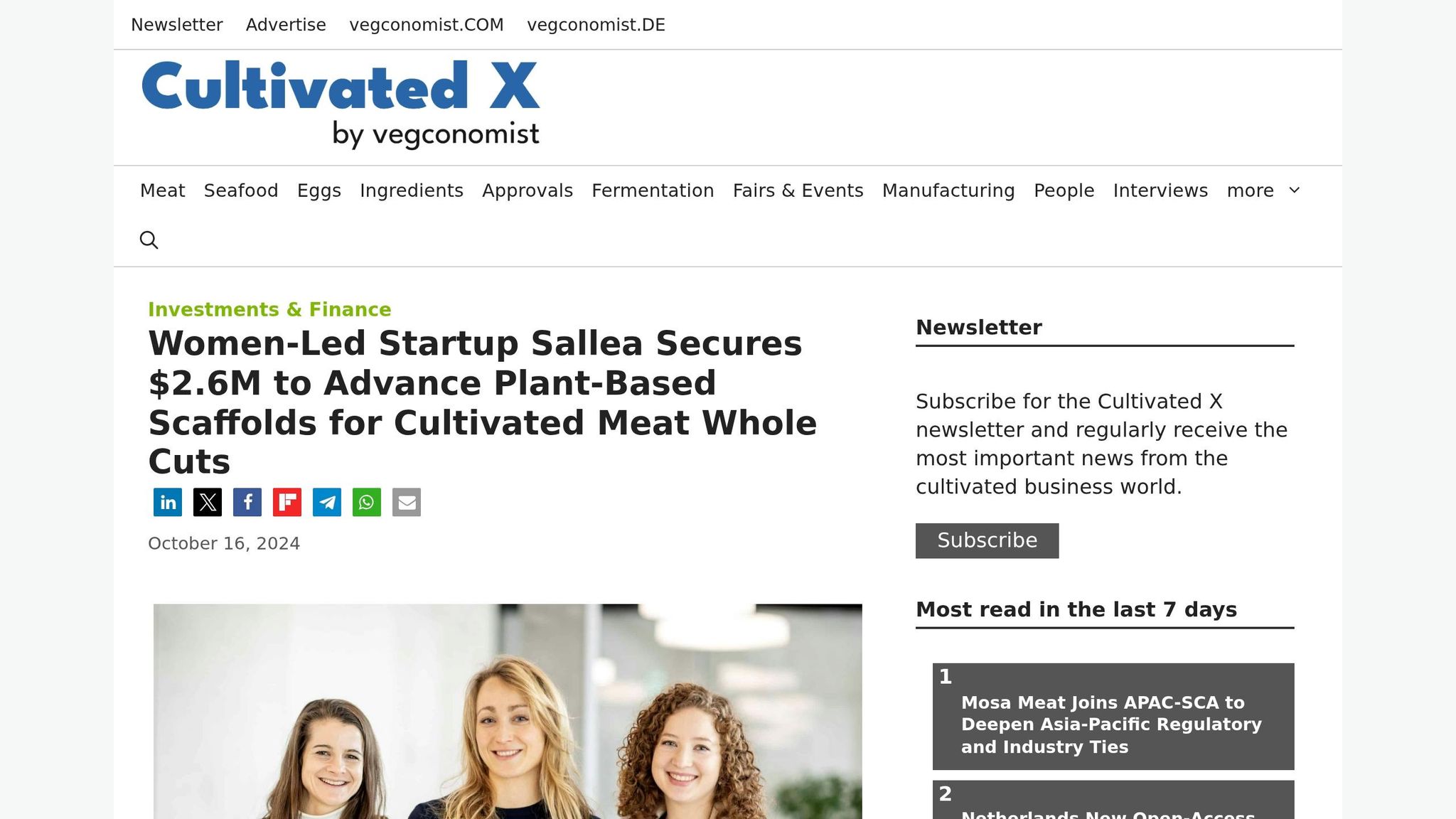
Sallea’s scaffolding technology, developed from research at ETH Zurich, recently secured US$2.6 million in pre-seed funding to expand production [4].
Women-Led Cultivated Meat Companies to Watch
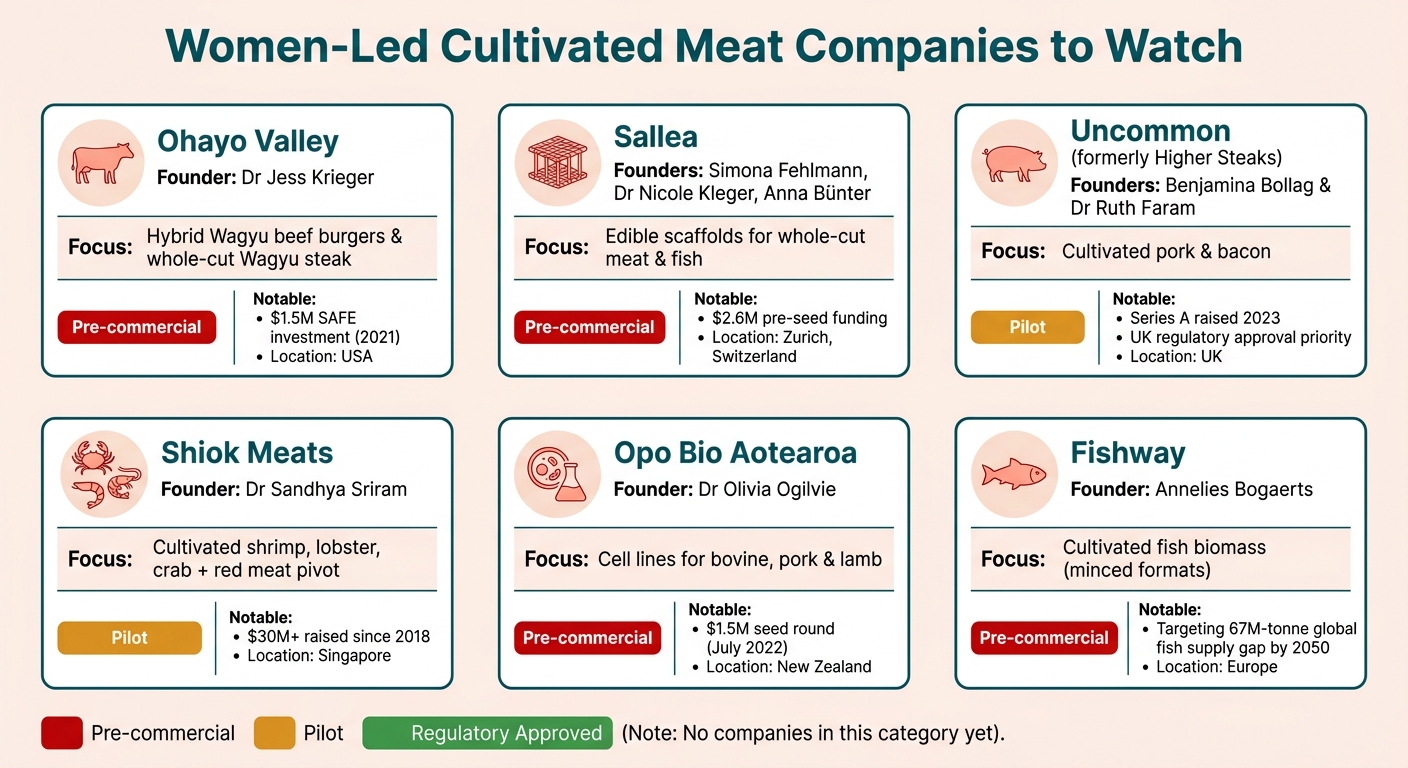
Women-Led Cultivated Meat Companies: At-a-Glance Comparison
Ohayo Valley
Founded by: Dr Jess Krieger
Product focus: Hybrid Cultivated Meat Wagyu beef burgers and whole-cut Wagyu steak
Commercial stage: Early-stage / pre-market
Dr Jess Krieger has been at the forefront of Cultivated Meat science since 2010 [7]. Her company, Ohayo Valley, combines Cultivated Wagyu beef cells with plant-based proteins to replicate the distinctive fat marbling and texture that make Wagyu beef so sought-after. Their signature product, the "WagyuMe" burger, is a hybrid creation - a practical stepping stone before advancing to fully cultivated Wagyu steak. In November 2021, Agronomics, an investment firm, supported Ohayo Valley's growth with a US$1.5 million SAFE (Simple Agreement for Future Equity) subscription [7]. Looking ahead, the company plans to adopt a B2B licensing approach, providing their Cultivated Meat technology to other producers rather than selling directly to consumers [9].
Sallea
Founded by: Simona Fehlmann, Dr Nicole Kleger, and Anna Bünter
Product focus: Edible scaffolds for whole-cut Cultivated Meat products (meat and fish)
Commercial stage: Pre-seed / R&D phase
Sallea takes a different approach by focusing on edible scaffolds, a crucial component for creating whole-cut Cultivated Meat. Their scaffolds are fully customisable, allowing for variations in nutritional content, texture, and even added vitamins [4]. The company recently raised US$2.6 million in pre-seed funding to expand production capabilities [4]. Without advanced scaffolding, producing realistic cultivated steaks or fish fillets at scale remains a major hurdle. Sallea’s work highlights the innovative ways women are shaping the Cultivated Meat industry.
Other Women-Led Companies
In addition to Ohayo Valley and Sallea, several other women-led companies are making strides in the Cultivated Meat space. Here’s a quick look at some key players:
| Company | Key Founder(s) | Product Focus | Notable Milestone |
|---|---|---|---|
| Uncommon (formerly Higher Steaks) | Benjamina Bollag & Dr Ruth Faram | Cultivated pork and bacon | Series A raised in 2023; UK regulatory approval a key focus [1] |
| Shiok Meats | Dr Sandhya Sriram | Cultivated shrimp, lobster, crab; now pivoting to red meat | Over US$30 million raised since 2018 [2] |
| Opo Bio Aotearoa | Dr Olivia Ogilvie | High-performing cell lines for bovine, pork, and lamb | US$1.5 million seed round raised in July 2022 [10] |
| Fishway | Annelies Bogaerts | Cultivated fish biomass (minced formats) | Tackling a projected 67-million-tonne global fish supply gap by 2050 [8] |
Uncommon is particularly relevant for UK consumers, with co-founder Benjamina Bollag emphasising their focus on regulatory approval:
"Regulatory approval in the UK is our priority alongside the US – we hope regulations stay as strict as they have been to avoid bad actors." [1]
Shiok Meats provides an interesting example of adaptability. Initially focused on cultivated crustaceans, the company acquired Gaia Foods to fast-track commercialisation of beef and pork products while continuing to refine their seafood technology [2].
What to Expect Next from Women-Led Cultivated Meat
Regulatory Milestones to Follow
For those in the UK, keeping an eye on Novel Food dossiers submitted to the Food Standards Agency (FSA) is key to understanding the cultivated meat timeline. International regulatory approvals often provide a glimpse of what’s to come. Take Parima, for instance: they received approval from the Singapore Food Agency for cultivated chicken in October 2025 and cultivated duck in June 2026 [12][13]. Nicolas Morin-Forest, CEO of Parima, summed it up well:
"Consistent regulatory success confirms platform strength." [12]
Another area to watch is the European Feed Materials Register, particularly for cultivated pet food. Katharina Eist Holland, Strategic Lead at BeneMeat, highlighted the significance of this approach:
"Pet food offered a realistic and responsible entry point. The regulatory pathway allowed us to bring cultivated meat to market earlier, while working closely with authorities to build understanding and trust." [11]
BeneMeat has already taken a big step by registering its cultivated cells under ID# 009569, paving the way for similar products to make their way into the UK market [11]. These developments are setting the stage for the next generation of cultivated products.
Which Products Are Likely to Reach Market First
Cultivated pet food seems poised to lead the charge. Surveys show that 96% of pet owners are comfortable feeding it to their dogs, with 85% willing to do so regularly [11]. Women-led companies are at the forefront of these early launches, demonstrating their critical role in bringing cultivated meat to market.
As launch dates draw closer, staying informed will be essential for consumers eager to try these products.
Staying Up to Date Through Cultivated Meat Shop
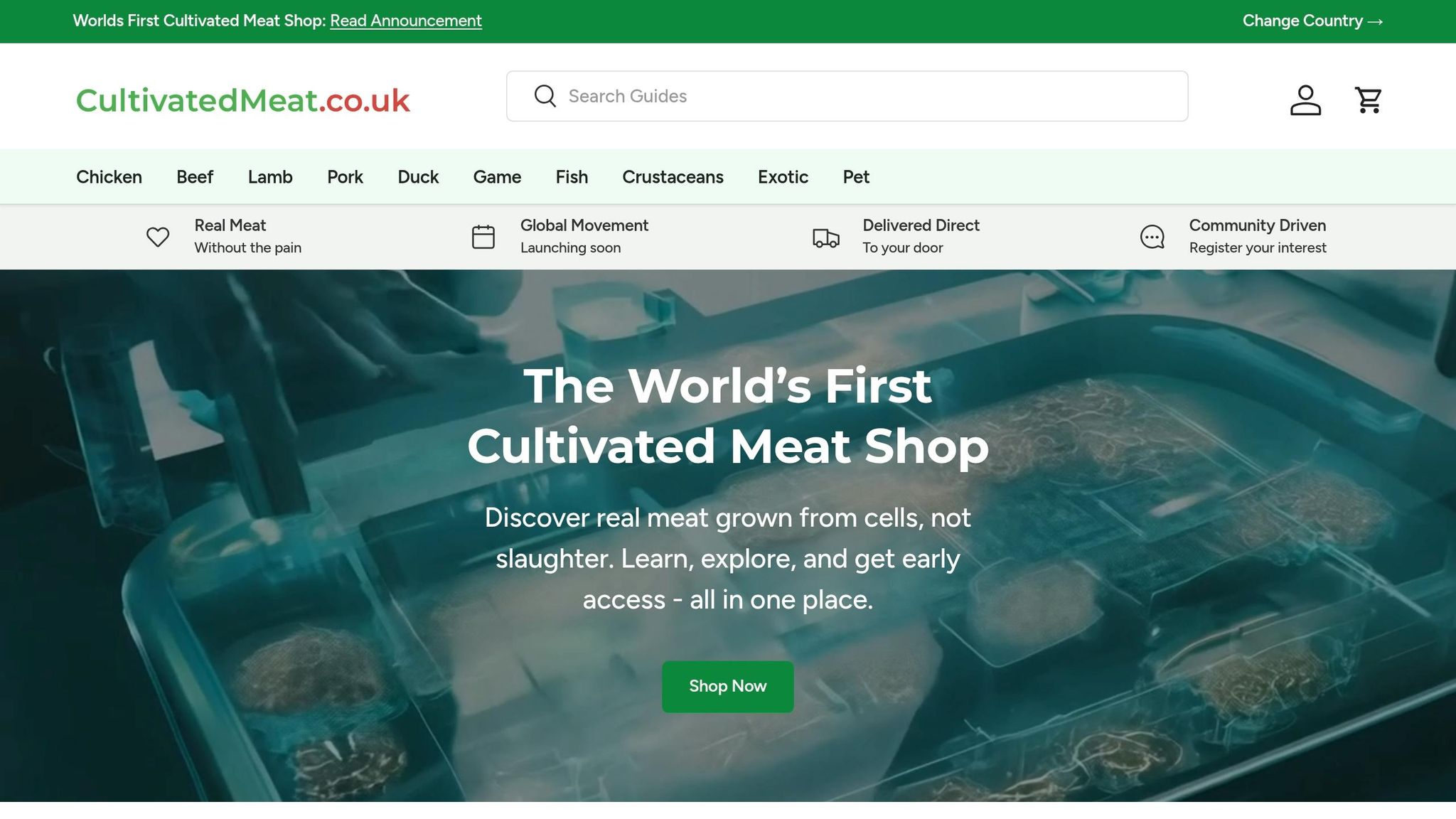
The cultivated meat industry is evolving quickly, and keeping track of developments is no small task. Cultivated Meat Shop offers a way to stay in the loop with product previews, updates from companies, and educational resources. Joining their waitlist is a simple way for UK consumers to stay ahead of the curve on upcoming launches.
FAQs
Is Cultivated Meat safe to eat?
Cultivated meat is created as a safe, cruelty-free alternative to traditional meat, offering a solution that doesn’t rely on animal slaughter. Grown in controlled settings, it avoids the use of antibiotics, which helps to minimise risks such as antibiotic resistance. It can also be produced without harmful pathogens, providing a cleaner and safer option. Beyond that, it offers a reliable food source, unaffected by diseases that often impact livestock. At Cultivated Meat Shop, you’ll find straightforward and engaging insights into its safety, health advantages, and rigorous production practices.
When will Cultivated Meat be available in the UK?
There’s no official date yet for when cultivated meat will be available in UK supermarkets. However, several companies have already submitted their dossiers to UK regulators, and these are currently among the most advanced under review. For updates on the regulatory process and to explore more about this new food category, check out Cultivated Meat Shop for resources and the latest news.
Why are pet food and hybrid products launching first?
Pet food and hybrid products serve as an effective entry point for cultivated meat. These formats give companies the chance to address key aspects like nutrition, production hurdles, and environmental considerations. Hybrid products, which blend cultivated ingredients with plant-based proteins, help keep costs manageable, ensure production can scale, and allow for higher inclusion rates. This strategy provides a safe and nutritious option that's ready for consumers, all while helping them become more accustomed to this emerging technology.


