

Exotic cultivated meat - made from animal cells like lion, zebra, or antelope - is grown in sterile, controlled environments and undergoes strict safety checks before reaching UK shelves. Concerns about zoonotic diseases, toxins, and allergens are addressed through rigorous testing under the UK's "novel food" regulations, ensuring these products meet high safety standards. Key points include:
- Sterile Production: Cultivated meat avoids contamination risks associated with traditional farming or wild game.
- Regulatory Oversight: Products must pass toxicology, allergen, and microbiological safety tests before approval.
- Traceability and Labelling: Clear labelling ensures transparency about the product's origin and safety certifications.
- Consumer Safety: Tests show cultivated meat poses fewer foodborne pathogen risks compared to conventional meat.
Common Safety Concerns About Exotic Cultivated Meat
Are There Risks from Unusual Diseases or Toxins?
Some UK consumers worry that meat from exotic species like crocodile, kangaroo, or zebra might carry unique infections or toxins. The word "exotic" often implies something unfamiliar or untested, which can naturally lead to concerns about potential health risks.
However, cultivated meat is produced under highly controlled and sterile conditions. The process begins with carefully screened cells and eliminates exposure to parasites, bacteria, and viruses typically found in farmed or wild animals. Additionally, strict protocols, such as discarding any compromised batches, ensure a high level of safety.
A 2024 review highlights that safety measures used in industries like dairy, brewing, and fermentation - such as clean-in-place systems, heat treatments, and advanced air filtration - are also applied to cultivated meat production. The entire process, from cell banking to harvest, takes place in closed systems, significantly minimising contamination risks. Concerns about natural toxins or allergens are addressed by treating each new species of cultivated meat as a "novel food." This designation requires detailed compositional analysis and thorough toxicological and allergenicity testing before the product is approved for sale [1].
These robust safety protocols provide a clear framework for how exotic species are carefully regulated in this emerging industry.
Do Exotic Species Follow Different Safety Rules?
All cultivated meat, including exotic species, must comply with the same stringent safety standards under the novel food framework. In Great Britain, cultivated meat is regulated as a novel food, meaning it undergoes the same rigorous evaluation as more familiar options like cultivated chicken or beef. The core microbiological and hygiene standards remain consistent, regardless of the source animal.
For less common species, regulators may require additional assessments, particularly around toxicology and allergenicity, due to limited data on how these proteins might affect consumers. Companies must submit a comprehensive dossier that includes details about the source animal, cell lines, growth media, production methods, compositional analysis, and intended uses. Independent scientific panels then review this information, approving only those products that meet strict safety criteria. These evaluations consider factors such as the potential for allergic reactions, the accumulation of contaminants, and nutritional balance by comparing safe intake levels from studies with estimated human consumption.
Experts note that, when properly regulated and produced, cultivated meat can even offer safety benefits. For instance, it eliminates exposure to microbes commonly found in traditional slaughterhouses. Early approvals of cultivated chicken in places like Singapore and the US demonstrate the thoroughness of these evaluations. Exotic cultivated meats are held to the same - if not stricter - standards, ensuring they meet all safety requirements before entering the UK market [1].
Ensuring the food safety of cell-based food
How Exotic Cultivated Meat is Produced
The production of exotic cultivated meat follows a meticulously controlled process, ensuring safety from the initial cell sample to the final product.
From Cell Sample to Finished Product
The journey begins with a small cell sample, usually muscle stem cells or fibroblasts, taken from a healthy animal using minimally invasive methods under veterinary supervision. For exotic species like rare fish, game animals, or unusual livestock, this one-time biopsy is obtained from certified facilities with full traceability. These cells are then cryogenically stored and catalogued in secure cell banks, allowing the same lines to be reused indefinitely - eliminating the need for repeated animal sampling.
Once preserved, the cells are placed in bioreactors, where they are nurtured in a nutrient-rich growth medium. This medium contains essential components like water, amino acids, vitamins, minerals, salts, sugars, and signalling molecules that promote cell growth and differentiation into muscle and fat. To improve consistency and minimise risks, there's been a shift towards using animal-free ingredients in these media.
Inside the bioreactor, conditions such as temperature (around 37°C for mammalian cells, lower for fish cells), pH, oxygen levels, nutrient concentration, and cell density are carefully monitored and adjusted to maintain optimal growth. The process occurs in a closed system with sealed vessels and tubing, reducing the risk of contamination from environmental factors like dust or animal waste - issues often associated with traditional meat production.
When the cells reach the desired density, the process transitions to a "differentiation" phase. By altering the growth conditions, the cells develop into structured muscle fibres or fat tissue, sometimes using food-safe scaffolds. The resulting tissue is harvested, cleaned, and processed into formats like fillets, mince, or nuggets. Plant-based ingredients may also be added to achieve specific textures or cooking qualities.
The final product is real meat from exotic species, grown without raising or slaughtering animals. The production process eliminates many of the contamination risks found in conventional meat systems, as detailed below.
Preventing Contamination and Pathogens
Safety is prioritised at every stage of cultivated meat production. Without the protective immune system of a live animal, strict measures are implemented to prevent contamination - often exceeding the standards of traditional meat facilities.
Production sites are more akin to pharmaceutical or high-care food plants than abattoirs. They feature sterile air systems with HEPA filtration, cleanroom-style protocols for staff, and validated sterilisation methods for equipment and growth media. Raw materials are rigorously controlled to ensure only safe, consistent inputs are used.
Throughout the process, Good Manufacturing Practices (GMP) and Hazard Analysis and Critical Control Point (HACCP) systems are applied. These include critical checks for sterility, cleaning, and product testing. Regular environmental monitoring assesses air, surfaces, and bioreactor samples for microbial activity. If contamination is detected, affected batches are immediately discarded to prevent any risk to consumers.
A 2024 scientific review highlighted that most contamination incidents in pilot facilities stemmed from environmental bacteria or fungi introduced during handling. This underscores the importance of aseptic techniques. Notably, most cultivated meat producers now operate without antibiotics, relying instead on strict environmental controls and sterile processes [2].
This controlled approach significantly reduces risks associated with exotic diseases and zoonotic pathogens. Since cultivated meat is grown from screened cells in sealed vessels, it avoids common contamination pathways linked to animal gut, skin, or faecal material.
Before any batch is approved for sale, it undergoes rigorous testing for microbial contaminants like Salmonella, Listeria, and E. coli. Studies suggest that cultivated meat production, when properly managed, poses a lower risk of foodborne pathogens compared to conventional meat, largely due to the absence of slaughterhouses and fewer contamination routes [2].
For the UK and EU, cultivated meat - including exotic varieties - must pass a "novel food" assessment. This review evaluates its composition, production methods, toxicology, and potential allergens. Facilities must also comply with strict hygiene standards, including validated cleaning protocols, staff training, traceability systems, and regular inspections.
Thanks to its controlled environment, rigorous testing, and regulatory oversight, exotic cultivated meat destined for UK shelves meets the highest safety standards, from the initial cell sample to the final packaged product.
sbb-itb-c323ed3
Safety Standards and Regulation
Before exotic cultivated meat can appear on UK shelves, it must pass through one of the strictest food safety systems in the world. In the UK, cultivated meat falls under the category of novel foods, as defined by retained EU Regulation (EU) 2015/2283. This means no product - exotic or otherwise - can be sold without receiving formal pre-market authorisation from the Food Standards Agency (FSA). To gain approval, manufacturers must submit comprehensive dossiers detailing every stage of production, from the initial cell sample to the final packaged product. These dossiers include data on production methods, nutritional content, toxicology, microbiological safety, and potential allergens, ensuring the cultivated meat is as safe as its conventional counterparts.
Exotic cultivated meat faces even stricter scrutiny. Since these products often come from species less commonly consumed in the UK, regulators demand additional data on species-specific proteins, potential allergens, and unique metabolites that may not be present in traditional livestock. The European Food Safety Authority (EFSA) has issued guidance for evaluating cell-cultivated foods, with a focus on species-specific details. These include thorough characterisation of the cell lines, analysis of culture media components, identification of possible contaminants, and an understanding of how processing methods impact safety.
Safety assessments for these products also involve rigorous microbiological and toxicological controls. Manufacturers must implement strict HACCP protocols and maintain tight environmental controls throughout the production process. Toxicological evaluations cover any new ingredients or processing aids, such as scaffolding materials, to ensure no harmful contaminants accumulate. Allergenicity testing is particularly important for proteins from less-common species or those unfamiliar to the human diet.
Once a product receives a positive scientific opinion from EFSA or a successful evaluation by the FSA, it may be authorised for sale. This approval often comes with specific labelling or usage conditions to ensure consumers are fully informed about what they are purchasing. Whether cultivated meat is derived from conventional or exotic species, the regulatory process is equally rigorous.
International Cultivated Meat Approvals
Outside the UK and EU, several countries have established their own regulatory pathways for cultivated meat. Singapore led the way, becoming the first country to approve cultivated meat for commercial sale. Its novel food framework requires detailed safety dossiers, including assessments of production methods, composition, contaminants, and allergens. Similarly, Australia and New Zealand evaluate cultivated meat as a new food or ingredient through a joint regulatory system, demanding thorough evidence of safety before products can hit the market.
These international frameworks share core principles with UK and EU regulations: pre-market safety assessments, transparent labelling, and ongoing post-market monitoring. While regulatory approaches may differ slightly - such as in the US, where some states have introduced restrictions - UK consumers can rest assured that only products formally authorised as novel foods will be available for purchase.
| Jurisdiction | Regulator / Framework | Key Safety Requirements | Notes for Exotic Cultivated Meat |
|---|---|---|---|
| UK / EU | Food Standards Agency (UK) under retained EU Novel Food rules; EFSA scientific opinions (EU) | Pre-market novel food authorisation; submission of a detailed dossier covering production, toxicology, microbiological safety, and allergenicity assessments | Additional data on species-specific proteins, toxicology, and allergenicity are required if consumption history is limited |
| Singapore | Singapore Food Agency under the novel food framework | Case-by-case safety assessment, including evaluation of production processes, composition, contaminants, and allergens | Early approvals demonstrate that even products from non-traditional species can meet strict safety standards |
| Australia / New Zealand | Food Standards Australia New Zealand; Food Standards Code | Cultivated meat is assessed as a new food or ingredient, with evaluation of composition, toxicology, microbiological safety, and technological need | Exotic cultivated meat is treated as a novel ingredient, requiring comprehensive evidence of safety |
These frameworks ensure that any exotic cultivated meat entering the UK market meets the highest safety standards. Through robust scientific evaluation, detailed production assessments, and ongoing monitoring, multiple layers of protection are in place. While local policies and labelling requirements may vary, the core focus on safety remains consistent across jurisdictions.
What UK Consumers Should Know
When exotic cultivated meat starts appearing on UK shelves, it’s important to pay attention to labels. Look for products that have been authorised and deemed safe by regulators. The UK’s framework ensures that only thoroughly tested items make it to market, building on earlier discussions about production oversight and safety standards.
Reading Labels and Certifications
Cultivated meat sold in the UK will carry specific details about its approval by the Food Standards Agency (FSA). One key thing to look for is a Novel Food authorisation reference number, which confirms that the product has undergone a full safety assessment by the FSA. You can cross-check this number on the FSA’s official Novel Food catalogue to confirm its approval and see the conditions under which it was authorised.
The label must clearly identify the product as cultivated meat, not just "meat" or other ambiguous terms that might leave you guessing about its origin. For exotic varieties, expect precise descriptions like "cultivated venison", "cultivated ostrich", or "cultivated crocodile." This level of transparency ensures you know exactly what you’re buying and reassures you that the product has passed rigorous safety checks. Be cautious of any product using unclear language without proper regulatory context.
In addition to the Novel Food reference, look for HACCP certification or other indications of compliance with food safety management systems. HACCP (Hazard Analysis and Critical Control Points) certification means the manufacturer has taken steps to prevent contamination during production. Other third-party audit marks or certifications based on ISO standards can provide further assurance of strict process controls.
Pay close attention to allergen information, especially with exotic cultivated meats. Safety assessments include checks for potential allergens, and labels are required to list known allergens and any cross-contamination risks. If you have allergies or sensitivities to certain animal proteins, this section is crucial before trying something new. If you’re unsure, it’s a good idea to consult your healthcare provider first.
Labels will also include nutritional details, such as protein, fat, micronutrients, and calorie content per 100g. This allows you to compare the nutritional profile of cultivated meat with conventional meat from the same species, as they are made from the same biological tissues. Additionally, you’ll find the manufacturer’s name and address, a complete ingredient list (including any remnants of growth media), storage instructions, and a use-by or best-before date.
For those following specific dietary practices, check for certifications like halal or kosher. These will be clearly displayed on the packaging if applicable.
Using Cultivated Meat Shop as a Resource
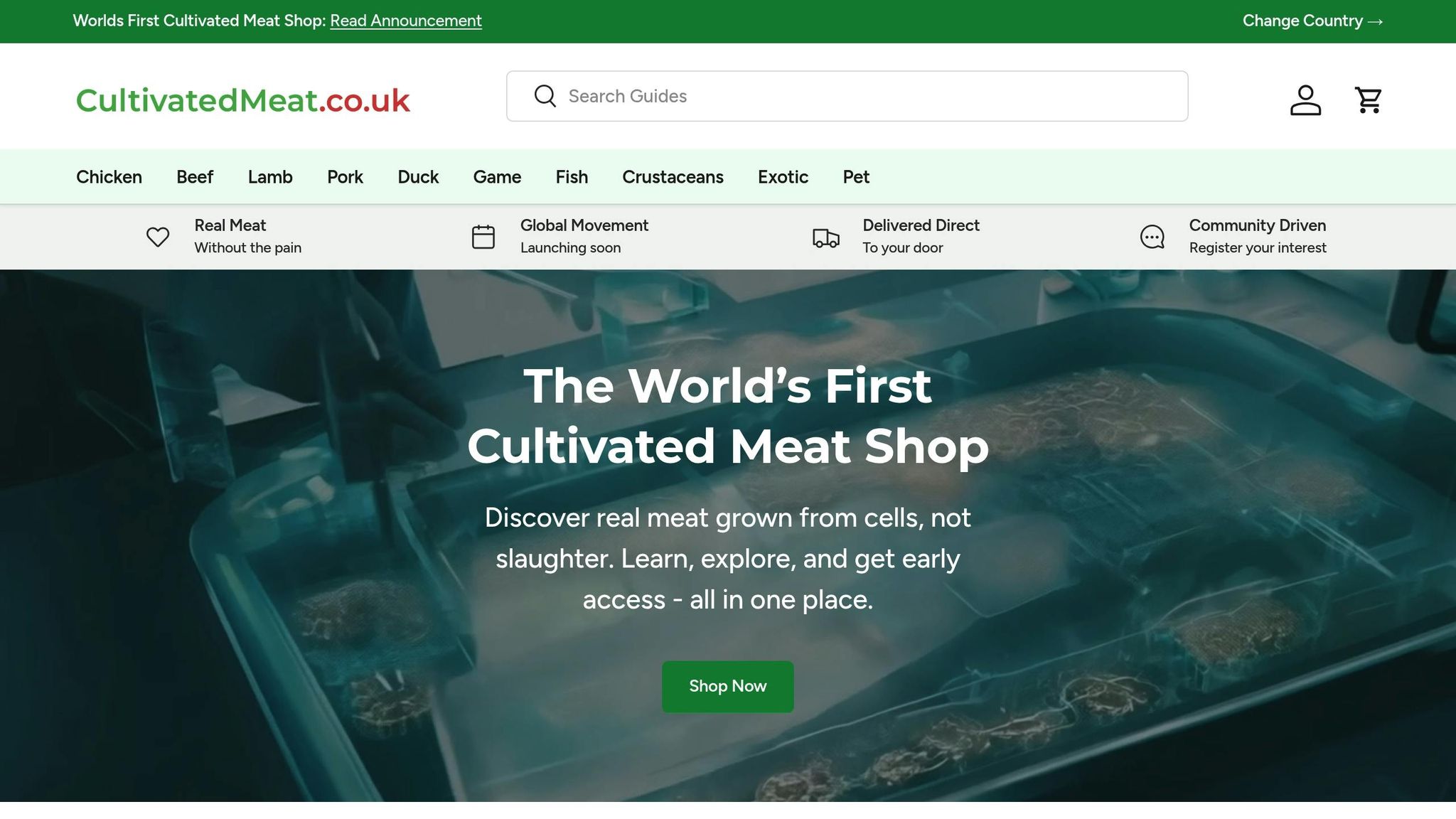
To navigate the world of cultivated meat with confidence, the Cultivated Meat Shop is a valuable tool. It offers science-based, reliable information, so you won’t have to rely on scattered news articles or questionable social media posts.
The platform breaks down how cultivated meat is made, highlighting the safety measures involved - like sterile bioreactors, controlled growth media, and extensive testing. These controlled conditions make cultivated meat a safer alternative to traditional exotic meats, which can carry risks from wildlife-borne pathogens or environmental contaminants.
Cultivated Meat Shop also explains the details behind Novel Food authorisation, labelling standards, and safety studies. If you come across unfamiliar terms or certifications on a product label, the site’s educational resources can help you understand their significance and why they matter.
You can also stay informed about upcoming product launches and approvals. By signing up for updates or joining waiting lists, you’ll receive timely information about new products, their safety credentials, and preparation tips - delivered straight to your inbox. This makes it easy to stay in the loop without hunting for updates yourself.
The site even offers previews of future products, like cultivated quail or kangaroo, so you can learn about their characteristics before they hit the market. This early exposure helps you feel more comfortable and informed when you’re ready to make a purchase.
Think of Cultivated Meat Shop as your go-to guide for verifying product claims and staying updated on regulatory changes. While reputable retailers will only stock authorised products, having an independent source to double-check can give you extra peace of mind.
When exotic cultivated meat becomes available, treat it like any other chilled or frozen high-protein food. Follow storage instructions, respect use-by dates, and prepare it according to the manufacturer’s recommendations - especially for exotic varieties that might require unfamiliar cooking methods.
Conclusion
Exotic cultivated meat offers a way to enjoy a variety of proteins produced in a safe, controlled setting. Unlike traditional methods, this approach significantly reduces risks associated with wildlife-borne pathogens, environmental contaminants, and other unpredictable factors that can disrupt conventional supply chains.
In the UK, every exotic cultivated meat product must pass through the rigorous Novel Food approval process. These strict safety assessments ensure that these products meet the same high standards as their conventional counterparts. A standout benefit of cultivated meat is its ability to replicate the structure and texture of traditional meat without relying on antibiotics, offering a safer option for consumers.
This strong regulatory framework helps build trust among consumers. As exotic cultivated meat begins to enter the UK market, staying informed is crucial. Cultivated Meat Shop is a reliable source for understanding safety standards, interpreting product labels, and exploring new launches. Whether you're curious about the science behind the technology, want to confirm a product's Novel Food authorisation, or need tips for preparing unfamiliar exotic varieties, the platform provides clear, science-based guidance. By signing up for updates, you'll be among the first to know when these products gain approval and hit the shelves.
With thorough safety measures and transparent labelling protocols in place, exotic cultivated meat is both dependable and carefully tested. It offers a gateway to flavours that were once challenging or risky to try. As this category grows, you'll be well-equipped to make confident and informed choices.
FAQs
Is exotic cultivated meat safe to eat compared to traditional exotic meats?
Yes, exotic cultivated meat is safe for consumption. It's produced in meticulously controlled settings that adhere to strict safety protocols. This process significantly reduces risks commonly linked to traditional exotic meats, such as contamination or exposure to harmful pathogens.
Before it becomes available to consumers, cultivated meat undergoes thorough testing to comply with stringent food safety regulations. It provides a secure and ethical alternative to conventional exotic meats, delivering the same authentic flavours and textures without involving slaughter or harmful practices.
How is the safety of exotic cultivated meat regulated in the UK?
In the UK, bringing exotic cultivated meat to market involves navigating strict regulatory checks to guarantee its safety for consumption. The Food Standards Agency (FSA) is responsible for reviewing and approving all novel foods, including cultivated meat, following a comprehensive set of guidelines. Producers must submit extensive evidence, detailing how their products are made, their nutritional profiles, and any potential risks.
Only after the FSA completes a rigorous scientific evaluation and grants approval can cultivated meat be made available to consumers. This process ensures that every product adheres to stringent safety standards, offering peace of mind when exploring this new food option.
Are there any allergens or dietary concerns with exotic cultivated meat?
Cultivated exotic meat is created with a strong focus on safety and nutritional considerations. While it shares a lot in common with traditional meat, potential allergens or sensitivities might arise from the ingredients used in its production, like growth mediums or additives.
For those with known food allergies or dietary restrictions, it's essential to review product labels carefully or reach out to the producer for more specific details. As cultivated meat becomes a more common option, regulations will ensure that ingredient lists are clear and transparent, empowering consumers to make well-informed decisions.


